
Introduction: Is SEO Dead, or Just Smarter?
If you’ve been trying to grow your business online, you’ve probably asked yourself: Do keywords still matter in 2025? With AI now influencing how people search and how Google delivers answers, the rules of SEO are changing faster than ever. What worked five years ago—like keyword stuffing or backlink spamming—can actually hurt you today.
This post will break down the evolution of SEO and show you how to adapt from the old keyword-focused strategies to the new AI-powered search era. Whether you’re a local business owner, a digital marketer, or a startup founder, you’ll learn actionable strategies that keep your website visible, relevant, and competitive.
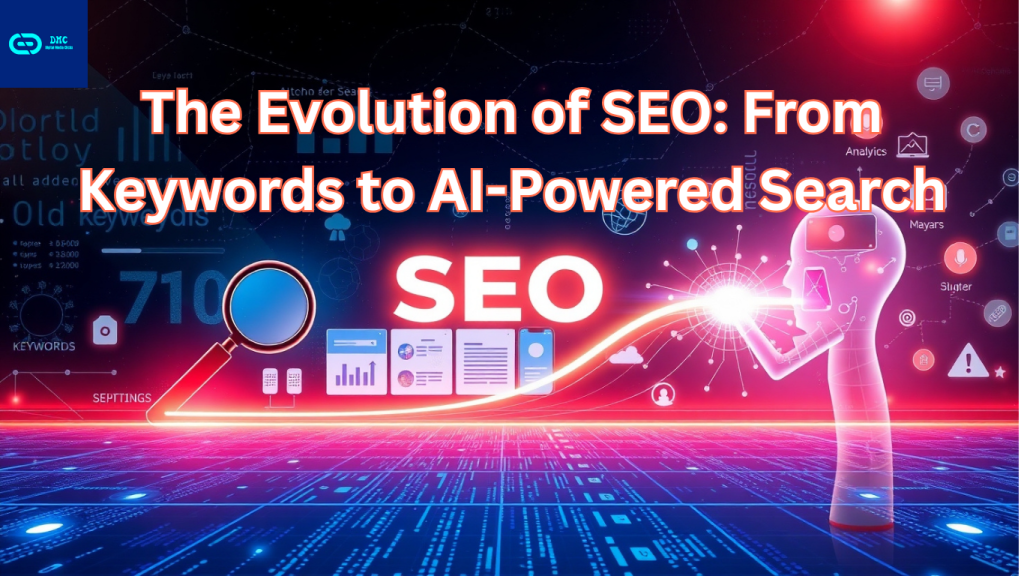
Why SEO Evolution Matters in 2025
Search behavior has changed dramatically. According to Google, over 60% of users now engage with AI-powered search features, like Search Generative Experience (SGE) and voice queries. That means people don’t just type “best Italian restaurant near me” anymore—they ask full questions like “What’s the best family-friendly Italian restaurant within 5 miles that takes reservations tonight?”
The takeaway? SEO is no longer about stuffing in keywords—it’s about understanding user intent, delivering the best answers, and ensuring your content is optimized for both humans and AI systems. Businesses that fail to adapt risk disappearing from search results altogether.
How Can You Adapt to AI-Powered SEO? (4 Key Strategies)
1. Focus on Search Intent, Not Just Keywords
Instead of optimizing for single keywords, target topics and questions your audience is asking.
- Example: Instead of “dentist Lahore,” optimize for “affordable dentist for kids in Lahore” or “What to expect at your first dental visit in Lahore?”
- Tools like AnswerThePublic and AlsoAsked can help you find real, intent-driven queries.
2. Create Conversational Content for Voice and AI Search
With smart assistants like Google Assistant, Siri, and Alexa, people search in complete sentences.
- Use Q&A-style subheadings (just like this blog is doing).
- Write in natural, conversational language that answers questions directly.
- Example: Instead of writing “Benefits of SEO,” try “Why is SEO important for small businesses in 2025?”
3. Leverage Structured Data for Better Visibility
AI-driven search engines thrive on structured information. Adding schema markup to your site helps search engines understand and display your content more effectively.
- Implement FAQ schema for common customer questions.
- Use Local Business schema if you’re targeting nearby customers.
- Example: A restaurant adding menu schema can appear directly in “Where can I get vegan pasta tonight?” searches.
4. Build Topic Authority with Content Clusters
Google increasingly rewards topic expertise. Instead of scattered blogs, build content clusters around a core topic.
- Example: If your niche is fitness, don’t just write “Best workout plans.” Create a cluster including:
- “How beginners can start strength training”
- “Nutrition tips for muscle recovery”
- “Best apps for home workouts in 2025”
- Link these articles internally to signal authority to both users and search engines.
5. Use AI Tools Smartly, But Don’t Over-Rely
AI content tools (like ChatGPT) can help with drafting ideas, keyword clustering, or FAQ creation, but always add a human layer for expertise, credibility, and originality. Google prioritizes content with E-E-A-T (Experience, Expertise, Authoritativeness, Trustworthiness).
- Share your personal experience, client results, or case studies.
- Example: “We’ve helped 25+ small businesses increase local traffic by 50% using AI-informed SEO strategies.”
Case Study: How a Local Business Adapted to AI SEO
A family-owned bakery in Lahore struggled to rank for “birthday cakes.” Their website traffic was flat, despite posting generic product pages.
Here’s what changed when they embraced AI-powered SEO strategies:
- Shifted content focus from “cakes” to questions customers ask, like “Where can I order a custom chocolate cake in Lahore?”
- Added FAQ schema to appear in Google’s AI snippets.
- Created content clusters around events (weddings, birthdays, corporate gifts).
- Optimized for voice search queries, like “What’s the best bakery near Gulberg that delivers at night?”
Result: Within 3 months, the bakery’s traffic grew by 70%, and online orders doubled. By aligning with AI-driven search behavior, they became the top local choice.
Conclusion: The Future of SEO Is Human + AI
SEO has evolved from keywords → backlinks → mobile-first → now AI-powered search. The businesses that thrive will be the ones that combine human expertise with AI-driven strategies, focusing on user intent, conversational content, and structured data.
If you want to stay ahead in 2025:
- Think beyond keywords.
- Optimize for real questions.
- Showcase authority with experience.
The earlier you adapt, the more visibility you’ll gain in an AI-first search world. At Digital Media Clicks, we’ve helped dozens of businesses navigate this AI-driven shift in SEO and boost their visibility online—let us help you stay ahead of the curve.
FAQs: Answering What You’re Asking
1. Are keywords still important in 2025?
Yes—but not the way they used to be. Keywords now serve as signals of intent, not exact matches. Focus on phrases and natural questions.
2. How does AI change SEO for small businesses?
AI levels the playing field by emphasizing quality answers over big budgets. Small businesses can rank by providing localized, intent-driven content.
3. What’s the difference between modern SEO and traditional SEO?
Traditional SEO focused on keywords and backlinks. Modern SEO is about user intent, structured data, and conversational content optimized for search engines and assistants.
4. Do I need to use AI tools for SEO?
You don’t have to, but AI tools can speed up research and content planning. Always review and add human expertise to avoid generic content.
5. How can I future-proof my SEO strategy?
Invest in evergreen content, optimize for voice search, and regularly update pages with fresh insights that align with new AI search behaviors.